Nashik Kumbh Mela – History and Mythological Significance
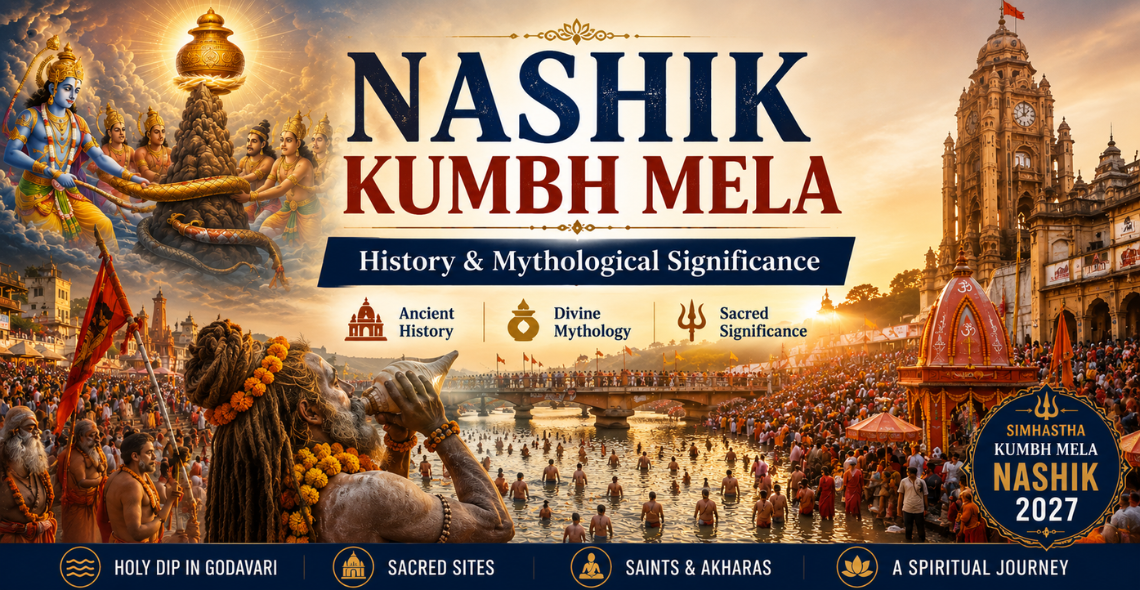
The Nashik Kumbh Mela is one of the largest and most sacred religious gatherings in India. Held once every 12 years, this spiritual event brings together millions of devotees, saints, Akharas, and pilgrims from different parts of the country. During the Kumbh period, Nashik and Trimbakeshwar become filled with devotional activities, holy rituals, spiritual camps, and Shahi Snan processions.
The Nashik Kumbh Mela history is deeply connected with Hindu mythology and the famous Samudra Manthan story. According to ancient beliefs, drops of Amrit, the nectar of immortality, fell at Nashik during the battle between gods and demons. That is why Nashik became one of the four sacred places where the Kumbh Mela is celebrated. Devotees believe that taking a holy dip in the Godavari River during this period brings spiritual purification and blessings.
The upcoming Nashik Kumbh Mela 2027 is expected to attract massive crowds from across India and around the world. From the mythological significance of the festival to the spiritual importance of Ramkund, Trimbakeshwar, saints, and Naga Sadhus, the Kumbh Mela continues to hold a special place in Hindu culture and tradition.
What is Nashik Kumbh Mela?
The Nashik Kumbh Mela is one of the four major Kumbh Melas celebrated in India and is considered among the holiest events in Hindu tradition. It takes place in Nashik and Trimbakeshwar, Maharashtra, once every 12 years. During this period, millions of devotees gather to take a holy dip in the sacred Godavari River and participate in spiritual rituals, prayers, and religious gatherings.
The Kumbh Mela in Nashik is also known as the Simhastha Kumbh Mela. The word “Simhastha” comes from the astrological position of Jupiter entering Leo, which is called Simha Rashi in Hindu astrology. Based on these planetary positions, the dates of the Kumbh Mela are decided according to ancient Hindu traditions and religious calculations.
One of the biggest attractions of the Nashik Kumbh Mela is the Shahi Snan procession, where saints, Akharas, and Naga Sadhus take the holy bath before the general public. The atmosphere during these days feels completely spiritual, with devotional chants, temple bells, saffron flags, and massive gatherings of pilgrims from different parts of India.
Unlike regular religious fairs, the Kumbh Mela carries deep mythological and spiritual significance. For many devotees, attending the Nashik Kumbh Mela is not just a festival visit but a once-in-a-lifetime spiritual journey connected with faith, purification, and Hindu culture.
History of Nashik Kumbh Mela
The history of Nashik Kumbh Mela is deeply connected with Hindu traditions, saints, and sacred river rituals followed for centuries. Over time, Nashik became one of the four holy places in India where the Kumbh Mela is celebrated. The spiritual importance of the Godavari River and nearby Trimbakeshwar region played a major role in making Nashik a sacred pilgrimage destination for devotees.
The Simhastha Kumbh Mela history is also linked with saints, sages, and Akharas who gathered here for spiritual discussions, rituals, and holy bathing ceremonies. Gradually, traditions like Shahi Snan processions, Akhara camps, and mass pilgrimages became an important part of the Kumbh Mela culture in Nashik.
Today, the Nashik Kumbh Mela is known as one of the world’s largest spiritual gatherings. Millions of devotees visit Ramkund and Trimbakeshwar during the Kumbh period to take a holy dip, attend rituals, and experience the spiritual atmosphere that has continued for generations.
The Story of Samudra Manthan
The story of Samudra Manthan is one of the most important mythological stories connected with the Kumbh Mela. According to Hindu mythology, gods (Devas) and demons (Asuras) worked together to churn the ocean in search of Amrit, the nectar of immortality. This great event is known as the Samudra Manthan, or the churning of the ocean.
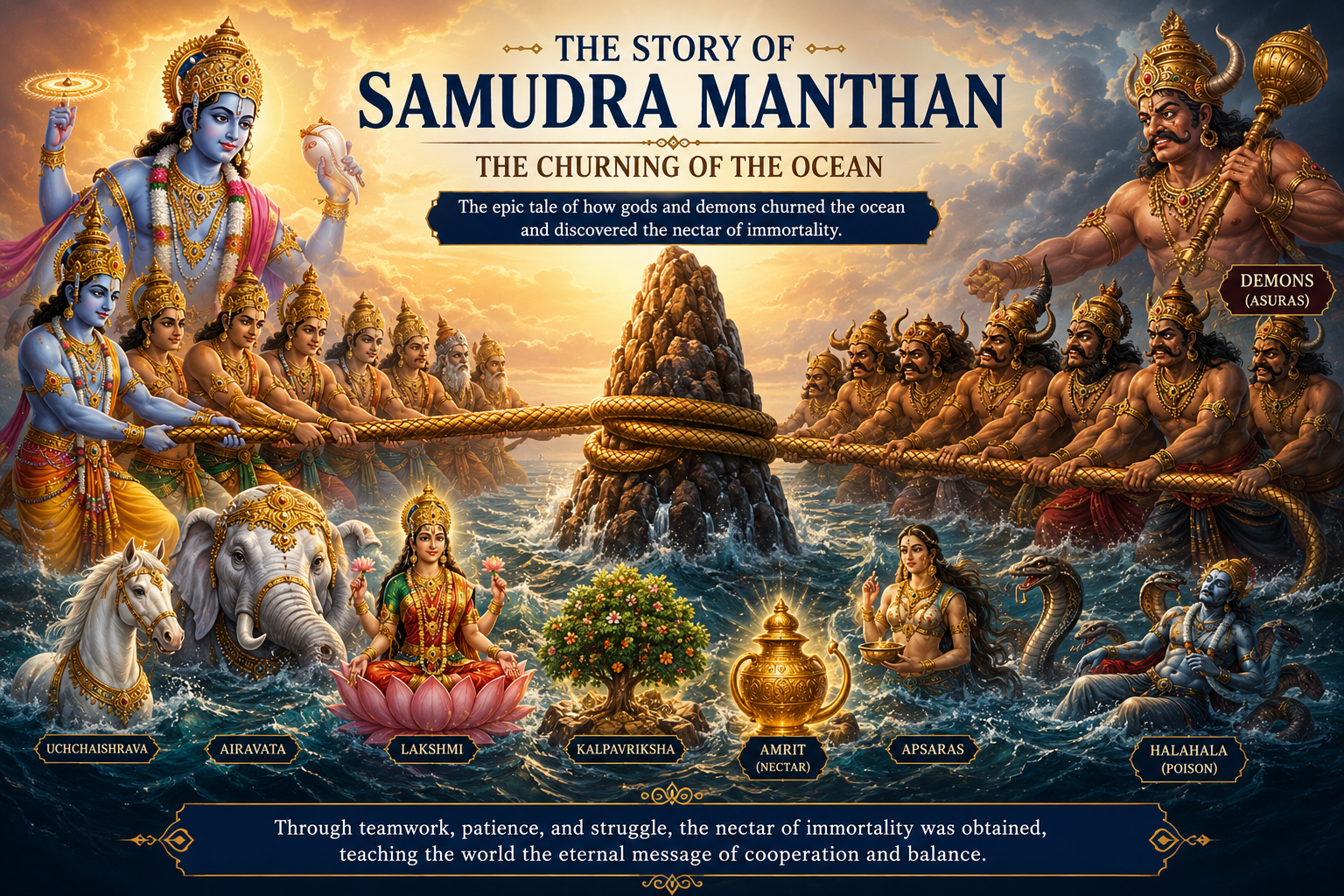
During the churning process, many divine objects and powers emerged from the ocean, but the most valuable was the Amrit Kalash. A fierce battle began between the gods and demons to gain control of the nectar. During this struggle, a few drops of Amrit are believed to have fallen at four sacred places - Prayagraj, Haridwar, Ujjain, and Nashik.
This is the main reason why the Kumbh Mela is celebrated at these four locations. The story of Samudra Manthan is not just a mythological tale for devotees but a symbol of faith, spirituality, and the victory of divine power over evil. Even today, millions of pilgrims attend the Nashik Kumbh Mela believing that the holy rivers become spiritually powerful during this sacred period.
How Nashik Became Connected to Kumbh Mela
Nashik became connected to the Kumbh Mela through the story of Samudra Manthan and the belief that drops of Amrit fell at this sacred location during the battle between gods and demons. According to Hindu mythology, one of the drops of the nectar of immortality fell near the Godavari River in Nashik, which made the place spiritually powerful and holy for devotees.
Ramkund in Nashik and Kushavarta Kund in Trimbakeshwar later became important centers for sacred bathing rituals during the Kumbh period. Devotees believe that taking a holy dip in these waters during the Kumbh Mela helps cleanse sins and brings spiritual blessings. That’s why millions of pilgrims visit Nashik and Trimbakeshwar during the Simhastha Kumbh Mela.
The spiritual connection of Lord Shiva, the Godavari River, saints, Akharas, and ancient Hindu traditions also helped Nashik become one of the four official Kumbh Mela locations in India. Even today, the city holds deep religious importance for devotees visiting during the Nashik Kumbh Mela 2027 and other sacred occasions.
Mythological Significance of Nashik Kumbh Mela
The Nashik Kumbh Mela holds deep mythological significance in Hindu culture and is believed to be one of the holiest spiritual gatherings in the world. Devotees believe that during the Kumbh period, the sacred waters of the Godavari River become spiritually powerful because of the divine connection with the Amrit from the Samudra Manthan story.
Taking a holy dip during the Kumbh Mela is considered highly sacred among pilgrims. Many people believe that bathing at Ramkund and Kushavarta Kund during this period helps cleanse sins, remove negative energy, and bring spiritual peace. Saints, sages, and Akharas also gather during the festival to perform rituals, prayers, meditation, and spiritual teachings.
The Nashik Kumbh Mela mythological significance is not limited only to rituals and bathing traditions. For many devotees, the event represents faith, devotion, spiritual awakening, and the connection between humans and divine energy. That is why millions of people continue to attend the Kumbh Mela generation after generation.
Why Nashik Kumbh Mela Happens Every 12 Years
The Nashik Kumbh Mela takes place once every 12 years because of a special planetary alignment mentioned in Hindu astrology. The festival is celebrated when the planet Jupiter enters Leo, also known as Simha Rashi. That is why the Nashik Kumbh Mela is also called the Simhastha Kumbh Mela.
In Hindu tradition, planetary positions are believed to influence spiritual energy and religious timings. Saints and scholars use ancient astrological calculations to decide the exact Kumbh Mela period and Shahi Snan dates. These timings are considered highly sacred among devotees.
The 12-year cycle is connected with the movement of Jupiter around the zodiac signs. According to beliefs, this planetary combination recreates the same spiritual conditions linked with the Samudra Manthan story and the fall of Amrit at Nashik. That is why millions of devotees gather during the Kumbh period to take part in holy bathing rituals and spiritual activities.
Importance of Ramkund and Trimbakeshwar
Ramkund in Nashik and Trimbakeshwar near Nashik are considered two of the most sacred places connected with the Kumbh Mela. During the Nashik Kumbh Mela, millions of devotees gather at these locations for holy bathing rituals, prayers, and spiritual activities. Both places hold deep religious importance in Hindu tradition.
Ramkund is located on the banks of the Godavari River in Nashik and is believed to be connected with Lord Ram. Devotees believe that taking a holy dip here during the Kumbh period brings spiritual purification and blessings. Most of the major bathing rituals and Shahi Snan activities in Nashik happen around the Ramkund area.
Trimbakeshwar is famous for the Trimbakeshwar Jyotirlinga, one of the twelve sacred Jyotirlingas of Lord Shiva. Kushavarta Kund near the temple is also considered highly sacred for holy bathing during the Kumbh Mela. The spiritual connection between Ramkund, the Godavari River, and Trimbakeshwar makes Nashik one of the most important pilgrimage destinations in India.
Akharas and Naga Sadhus in Nashik Kumbh Mela
Akharas and Naga Sadhus are among the most important parts of the Nashik Kumbh Mela. Their presence gives the festival its traditional spiritual identity and attracts millions of devotees and visitors during the Kumbh period. Different Akharas from across India gather in Nashik and Trimbakeshwar to participate in rituals, spiritual discussions, and the famous Shahi Snan processions.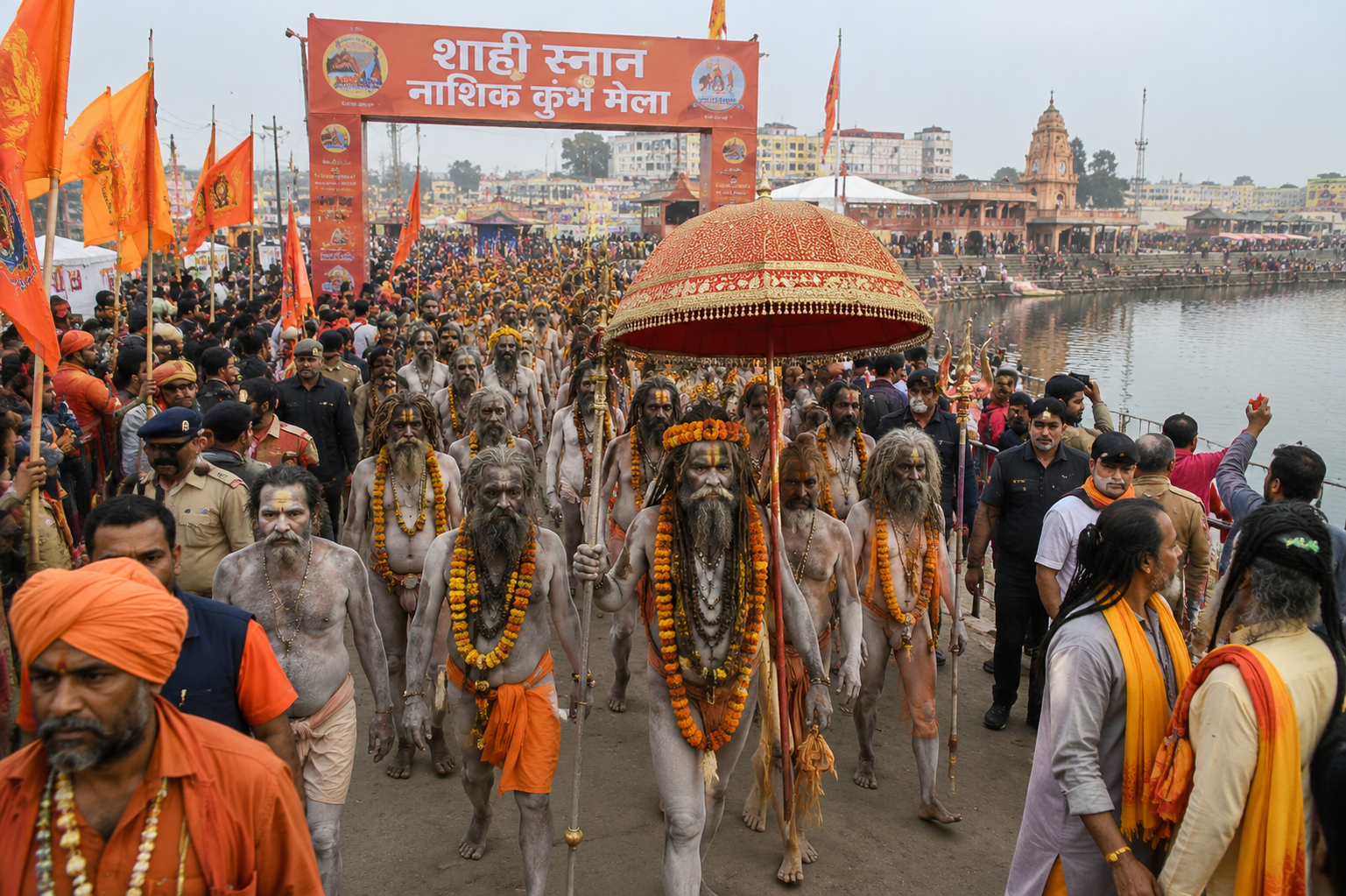
Akharas are traditional groups of saints and spiritual leaders who follow ancient Hindu practices and teachings. Some Akharas are connected with Lord Shiva, while others follow Vaishnav traditions. During the Kumbh Mela, these groups stay in large spiritual camps where devotees can attend prayers, satsangs, and religious activities.
Naga Sadhus are especially known for their unique appearance, ash-covered bodies, and strict spiritual lifestyle. They are often seen carrying tridents, chanting prayers, and leading grand Shahi Snan processions during the Kumbh Mela. For many pilgrims, watching the Akharas and Naga Sadhus during the Nashik Kumbh Mela becomes one of the most unforgettable spiritual experiences of the entire journey.
Nashik Kumbh Mela 2027 – What Devotees Can Expect
The Nashik Kumbh Mela 2027 is expected to attract millions of devotees, saints, tourists, and spiritual seekers from across India and different parts of the world. During the Kumbh period, Nashik and Trimbakeshwar will become filled with spiritual activities, Shahi Snan processions, devotional chants, Akhara camps, food stalls, and religious gatherings across the city.
Devotees visiting the Nashik Kumbh Mela 2027 can expect very large crowds, especially during the main Shahi Snan dates. Areas around Ramkund, Panchavati, Kushavarta Kund, and Trimbakeshwar temple are likely to remain crowded throughout the day. Hotels, buses, trains, and local transport may also become heavily booked during peak periods.
The Maharashtra Government and local authorities are expected to make large-scale arrangements for crowd management, security, medical facilities, parking, and transportation. Temporary camps, help centers, food services, and spiritual programs will also be set up for pilgrims visiting the Kumbh Mela.
For many devotees, the biggest attraction will remain the spiritual atmosphere of the festival. Watching saints, Naga Sadhus, Akharas, and thousands of devotees gathered together for prayers and holy bathing creates a powerful experience that feels very different from regular religious events.
Cultural Importance of Nashik Kumbh Mela
The Nashik Kumbh Mela is not only a religious gathering but also an important part of India’s cultural and spiritual heritage. People from different states, languages, traditions, and communities come together during the festival, which creates a strong feeling of unity and devotion. The event reflects centuries-old Hindu traditions that are still followed with great faith today.
During the Kumbh Mela, Nashik becomes filled with bhajans, spiritual discussions, religious processions, traditional rituals, and devotional activities happening throughout the day. Saints, Akharas, and spiritual leaders organize satsangs and prayers where devotees gather to listen to teachings and participate in rituals.
The festival also supports local culture, food traditions, handicrafts, and pilgrimage tourism across Nashik and Trimbakeshwar. For many visitors, the Kumbh Mela becomes more than just a spiritual journey, it becomes a chance to experience India’s ancient traditions, faith, and cultural richness all in one place.
Lesser-Known Facts About Nashik Kumbh Mela
Many people know the Nashik Kumbh Mela for its Shahi Snan and huge crowds, but the festival also has several interesting facts that many devotees are unaware of. One unique thing about the Nashik Kumbh Mela is that it is celebrated at two important locations, Nashik and Trimbakeshwar. Both places hold separate spiritual importance during the Kumbh period.
Another lesser-known fact is that the Nashik Kumbh Mela is also called the Simhastha Kumbh Mela because it is linked with Jupiter entering Simha Rashi (Leo). The dates of the festival are decided using ancient Hindu astrological calculations followed for generations.
The Kumbh Mela also becomes one of the largest temporary spiritual settlements in the world during the festival period. Huge camps, kitchens, medical centers, prayer areas, and accommodation setups are created for saints and pilgrims visiting from different parts of India.
Many devotees are also surprised to learn that some Akharas follow traditions and rituals that are hundreds of years old. The discipline, spiritual practices, and Shahi Snan processions of Naga Sadhus continue to preserve ancient Hindu traditions even today.
FAQs About Nashik Kumbh Mela
1. Where does Nashik Kumbh Mela take place?
The Nashik Kumbh Mela takes place mainly at Ramkund in Nashik and Kushavarta Kund in Trimbakeshwar, Maharashtra.
2. How long does the Nashik Kumbh Mela last?
The Kumbh Mela activities continue for several months, but the main crowd gathers during the Shahi Snan dates and major bathing rituals.
3. Is Nashik Kumbh Mela free to attend?
Yes, devotees and visitors can attend the Nashik Kumbh Mela without any entry fee. Expenses usually depend on travel, food, and accommodation choices.
4. Which river is connected with Nashik Kumbh Mela?
The Godavari River is the main sacred river connected with the Nashik Kumbh Mela.
5. What is Shahi Snan in Kumbh Mela?
Shahi Snan is the royal holy bath taken by saints, Akharas, and Naga Sadhus during special bathing dates of the Kumbh Mela.
6. Do only saints attend the Kumbh Mela?
No, millions of common devotees, families, tourists, and spiritual seekers also visit the Kumbh Mela along with saints and Akharas.
7. Is Nashik Kumbh Mela safe for families?
Yes, the Kumbh Mela is generally safe for families, but visitors should follow crowd management rules and official instructions during peak days.
8. What should pilgrims carry during Nashik Kumbh Mela?
Pilgrims usually carry comfortable footwear, water bottles, rain protection, medicines, ID proof, and light clothing for the journey.
Conclusion
The Nashik Kumbh Mela is much more than a religious gathering. It is a powerful blend of faith, spirituality, mythology, history, and centuries-old Hindu traditions that continue to inspire millions of devotees even today. From the sacred Godavari River and Ramkund to the spiritual presence of saints, Akharas, and Naga Sadhus, every part of the festival carries deep religious meaning.
The story of Samudra Manthan, the belief in the holy Amrit, and the spiritual importance of sacred bathing rituals are what make the Nashik Kumbh Mela truly special in Hindu culture. That’s why devotees from across India and around the world continue to gather here every 12 years with faith and devotion.
The upcoming Nashik Kumbh Mela, History and Mythological Significance is expected to attract massive attention as pilgrims prepare for Nashik Kumbh Mela 2027. For many people, visiting the Kumbh Mela is not just a journey to a holy place, it becomes a spiritual experience that stays in memory for a lifetime.