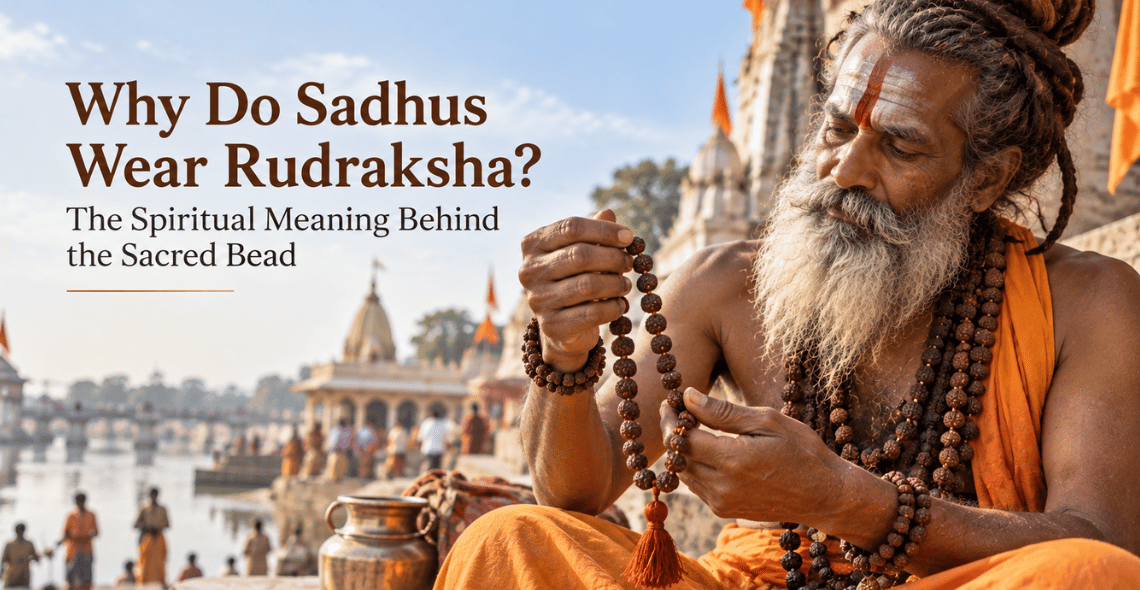
Rudraksha beads are a familiar sight around many Sadhus, especially those following the Shaiva tradition. At Kumbh Mela, visitors may notice Sadhus wearing Rudraksha malas along with other traditional symbols of their spiritual life. But Rudraksha is not simply an ornament worn by ascetics. For many devotees, it carries a deeper connection with Lord Shiva, devotion and the path of spiritual discipline.
A Rudraksha mala is more than a string of sacred beads. In spiritual practice, it can serve as a reminder of devotion and regular practice, especially during prayer, mantra repetition and meditation. For Sadhus, its importance comes not only from the beads themselves, but also from the faith, practice and intention behind wearing and using them. These meanings can vary across different traditions and practitioners, but the mala remains a meaningful part of the spiritual practices associated with Shaivism.
The Rudraksha mala traditionally represents:
Devotion to Shiva: The beads are closely associated with Lord Shiva and can represent a devotee’s connection with him.
Japa and remembrance: A mala can be used to count repetitions of a mantra, helping the practitioner stay focused during prayer.
Spiritual discipline: Repeating a mantra with a mala requires regular practice and patience, qualities closely linked with the ascetic path.
Detachment: For a Sadhu, the mala can also represent a life turned away from material attachments and towards spiritual practice.