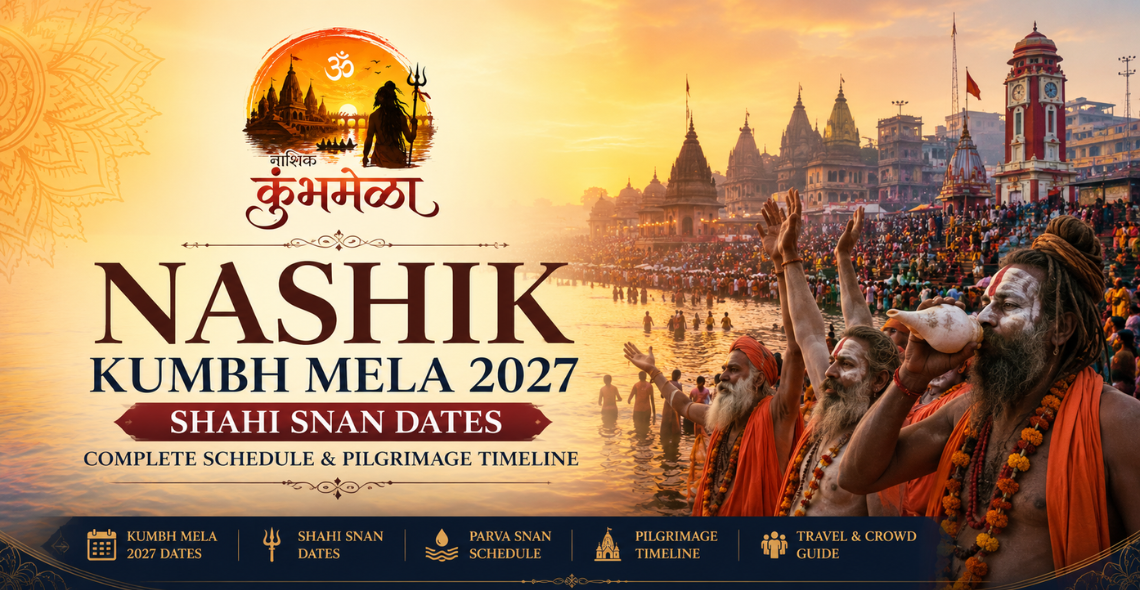
Nashik Kumbh Mela 2027 Shahi Snan Dates: Complete Schedule & Pilgrimage Timeline
The Nashik Kumbh Mela 2027 is going to be one of the biggest spiritual gatherings in India. Lakhs of devotees, saints, sadhus, and tourists from across the country are expected to visit Nashik and Trimbakeshwar during this sacred event. People have already started searching for the official Nashik Kumbh Mela 2027 dates so they can plan their journey, hotel bookings, transport, and darshan well in advance.
The most important days of the Kumbh Mela are the Shahi Snan dates. These are the royal bathing days when different Akharas, saints, and Naga Sadhus take the holy dip in the Godavari River. For many devotees, attending even one Shahi Snan is considered a once-in-a-lifetime spiritual experience. The energy during these days feels completely different - crowded, emotional, devotional, and unforgettable at the same time.
The Nashik Kumbh Mela, also called Simhastha Kumbh Mela, takes place once every 12 years. The event is mainly held at Ramkund in Nashik and Kushavarta Kund in Trimbakeshwar. Both places become the center of spiritual activities during the festival. According to Hindu beliefs, taking a holy dip during the Kumbh period helps cleanse sins and brings spiritual peace.
If you are planning to attend the Kumbh Mela in 2027, knowing the correct Shahi Snan schedule is the first and most important step. Travel prices increase quickly around the main bathing dates, and hotels near Ramkund and Trimbakeshwar get booked months earlier. That’s why many pilgrims prefer planning their trip as early as possible.
Nashik Kumbh Mela 2027 Dates Overview
The Nashik Kumbh Mela 2027 will officially begin on 31 October 2026 and continue until 24 July 2028. Unlike many other religious festivals that last for a few days or weeks, the Kumbh Mela runs for a long period because different rituals, bathing dates, spiritual gatherings, and pilgrim activities happen throughout the timeline. The main Shahi Snan dates in 2027 are expected to witness the highest crowd.
This Simhastha Kumbh Mela will take place mainly at two sacred locations — Ramkund in Nashik and Kushavarta Kund in Trimbakeshwar. Ramkund is considered one of the holiest bathing ghats on the Godavari River, while Trimbakeshwar is famous for the Jyotirlinga temple dedicated to Lord Shiva. During the Kumbh period, both places become packed with devotees, saints, Akharas, and spiritual camps from different parts of India.
The Maharashtra Government is expecting a massive number of visitors during the event. Reports suggest that more than 15 to 20 crore pilgrims may visit Nashik during the entire Kumbh Mela period. The second Shahi Snan date is expected to attract the biggest crowd. Roads, hotels, railway stations, and nearby areas usually become extremely busy during these peak days. That’s why many people prefer planning transport and accommodation several months earlier.
Here are the most important Nashik Kumbh Mela 2027 dates pilgrims should know before planning their trip:
For many devotees, the main focus remains the Shahi Snan days because these are considered the most spiritually powerful bathing dates of the entire Kumbh Mela. But people who want a slightly peaceful experience also visit during other Parva Snan dates when the crowd is lower and darshan becomes easier.
What is Shahi Snan in Kumbh Mela?
Shahi Snan is the most important ritual of the Kumbh Mela. On these special bathing days, saints, Mahants, Akharas, and Naga Sadhus take a holy dip in the sacred river before the general public. In the Nashik Kumbh Mela 2027, the Shahi Snan will take place at Ramkund in Nashik and Kushavarta Kund in Trimbakeshwar. These days attract the highest number of devotees because people believe bathing during this time brings spiritual purification and blessings.
The word “Shahi” means royal. The name comes from the grand processions of Akharas entering the ghats with traditional rituals, horses, flags, drums, conch sounds, and chanting. The atmosphere during these processions feels powerful and emotional. Many devotees wait for years to witness this moment in person. Naga Sadhus, covered in ash and following ancient traditions, become one of the biggest attractions during the Shahi Snan.
In recent years, the government has also started using the term “Amrit Snan” officially. But most devotees and pilgrims still search for “Shahi Snan dates,” so both names are commonly used. Whether someone calls it Shahi Snan or Amrit Snan, the spiritual meaning remains the same — taking a holy dip during the sacred planetary alignment of the Kumbh period.
The Akharas follow a fixed order during the bathing ritual. First, the saints and sadhus enter the ghats for their ritual bath. Only after their ceremony is completed do common pilgrims get access to the bathing areas. Security is usually very strict during these hours because crowd management becomes one of the biggest challenges of the Kumbh Mela.
For many people, attending the Shahi Snan is not just about religion. It also feels like witnessing living history, ancient traditions, and spiritual culture all together in one place. That’s why the Nashik Kumbh Mela 2027 Shahi Snan dates are already becoming an important search topic among devotees across India.
Official Nashik Kumbh Mela 2027 Shahi Snan Dates
The Shahi Snan dates are the most important days of the Nashik Kumbh Mela 2027. These are the days when the largest number of devotees gather at Ramkund and Trimbakeshwar to take the holy dip. Every Shahi Snan has its own spiritual importance, crowd pattern, and ritual process. Some pilgrims attend all three bathing dates, while many people choose one date based on travel plans, crowd comfort, or religious significance.
The Nashik Kumbh Mela 2027 will have three major Shahi Snan dates. Among them, the second Shahi Snan is expected to attract the biggest crowd of the entire Kumbh period. Hotels, transport, and local travel become very expensive near these dates, especially around Nashik city center and Ramkund area. That’s why early planning can save both money and stress during the trip.

Here are the officially announced Nashik Kumbh Mela 2027 Shahi Snan dates:
These dates were announced after discussions between the Maharashtra Government, Kumbh Mela authorities, and Akharas. Since the Kumbh Mela follows planetary and astrological calculations, these bathing dates carry special spiritual value in Hindu tradition.
Now let’s understand each Shahi Snan date in detail, including crowd expectations, spiritual importance, and travel planning tips for pilgrims.
First Shahi Snan – 2 August 2027
The first Shahi Snan of the Nashik Kumbh Mela 2027 will take place on 2 August 2027 (Monday). This day marks the beginning of the main bathing cycle of the Kumbh Mela and holds deep spiritual importance for devotees. Large numbers of saints, Akharas, and pilgrims will gather at Ramkund in Nashik from early morning to participate in the holy rituals and bathing ceremony.
On this day, the Akharas begin their royal processions before sunrise. Traditional chants, saffron flags, drums, conch sounds, decorated vehicles, and groups of Naga Sadhus create an atmosphere that feels completely different from regular religious events. Many people attend the first Shahi Snan mainly to witness these grand processions because they represent centuries-old traditions of the Kumbh Mela.
Crowd levels on the first Shahi Snan are expected to be very high, with lakhs of devotees visiting Nashik throughout the day. Roads near Panchavati, Ramkund, and nearby ghats may remain crowded for long hours. Pilgrims planning to attend this bathing day should ideally arrive in Nashik one or two days earlier to avoid last-minute travel problems.
For families and senior citizens, afternoon hours are usually more manageable compared to the early morning rush. Most Akhara rituals happen in the morning, so public access becomes smoother later in the day. Comfortable walking footwear, water bottles, light clothing, and basic medicines are helpful because long walking distances and waiting time are common during the Kumbh period.
The first Shahi Snan is often seen as the spiritual opening of the entire Kumbh Mela journey. Many devotees believe starting their pilgrimage on this sacred bathing day brings blessings, peace, and a stronger connection to the spiritual atmosphere of Nashik Kumbh Mela.
Second Shahi Snan – 31 August 2027
The second Shahi Snan, taking place on 31 August 2027 (Tuesday), is expected to be the biggest and most crowded bathing day of the entire Nashik Kumbh Mela 2027. This date falls during the sacred Shravan period, which already holds special importance in Hindu tradition, especially for Lord Shiva devotees. Because of this, millions of pilgrims are likely to gather at Ramkund and nearby ghats for the holy dip.
For many devotees, this is considered the main Shahi Snan of the Kumbh Mela. The spiritual energy during this period feels intense and emotional. Streets across Nashik become filled with pilgrims, saints, bhajan groups, food stalls, volunteers, and spiritual camps. The entire city starts feeling like one massive religious gathering. Hotels near Ramkund, Panchavati, CBS area, and Trimbak Road usually get fully booked months in advance for this date.
Transport became one of the biggest challenges during the second Shahi Snan. Trains, buses, and highways connecting Mumbai, Pune, and Nashik experience heavy rush. Traffic restrictions are also expected near major Kumbh routes. People travelling from outside Maharashtra should try booking tickets and accommodation at least 4 to 5 months earlier because prices rise very quickly closer to the event.
Pilgrims attending this Shahi Snan should prepare for long walking distances and large crowds throughout the day. Early morning hours remain extremely packed because Akhara processions and rituals happen before public bathing begins. Many experienced visitors prefer taking the holy dip during afternoon hours when the crowd becomes slightly easier to manage.
Despite the heavy rush, the second Shahi Snan remains the most awaited day of the Nashik Kumbh Mela 2027. For many devotees, being part of this sacred gathering feels like a once-in-a-lifetime spiritual experience that stays in memory forever.
Third Shahi Snan – 11 & 12 September 2027
The third and final Shahi Snan of the Nashik Kumbh Mela 2027 will take place on 11 and 12 September 2027. This bathing ritual is unique because it happens across two different locations - Nashik and Trimbakeshwar. On 11 September, the rituals will take place at Ramkund in Nashik, while on 12 September, the Shahi Snan will continue at Kushavarta Kund in Trimbakeshwar.
This final bathing period holds great importance for both Vaishnav and Shaiva traditions. Different Akharas participate in separate rituals during these two days. Devotees who want to experience the complete spiritual atmosphere of the Kumbh Mela often try attending both locations. Many pilgrims stay in Nashik for the first day and travel to Trimbakeshwar for the next day’s rituals.
Compared to the second Shahi Snan, the crowd may feel slightly more distributed because activities happen at two places. But the roads between Nashik and Trimbakeshwar usually remain heavily crowded. The distance is around 28 kilometers, and travel time can increase significantly during the Kumbh period due to traffic control and security arrangements.
Trimbakeshwar becomes especially important during this Shahi Snan because of the famous Trimbakeshwar Jyotirlinga temple. Devotees visiting on 12 September often combine their holy bath with temple darshan. The atmosphere around Kushavarta Kund feels deeply spiritual, with continuous chanting, rituals, and devotional activities happening throughout the day.
The third Shahi Snan also marks the closing phase of the main Kumbh bathing cycle. For many pilgrims, attending this final sacred bath feels emotional because it completes the spiritual journey of the Nashik Kumbh Mela 2027.
Complete Nashik Kumbh Mela 2027 Timeline
The Nashik Kumbh Mela is not limited to only the Shahi Snan dates. The entire festival runs for many months and includes several important rituals, spiritual gatherings, Parva Snan days, religious discourses, and temple activities. Pilgrims visiting during different periods of the Kumbh Mela experience different types of atmosphere — some days feel highly crowded and energetic, while other days feel calmer and more devotional.
The official beginning of the Kumbh Mela starts with the Dhwajarohan, also called the flag hoisting ceremony. This ritual marks the formal opening of the Simhastha Kumbh celebrations in Nashik. The event then continues through various religious occasions before ending with the Dhwajarohan, or flag lowering ceremony, in 2028.
Here is the complete Nashik Kumbh Mela 2027 timeline:
One unique thing about the Nashik Kumbh Mela is its long duration. The extended timeline helps authorities manage crowd movement better because devotees visit across different months instead of gathering only on one or two days. This also gives pilgrims more flexibility while planning their trip, especially people travelling with family or senior citizens.
During the Kumbh period, many temporary camps, food services, medical centers, security arrangements, and spiritual programs are set up across Nashik and Trimbakeshwar. Saints and Akharas also stay in specially arranged areas where devotees can attend satsangs, bhajans, and religious discussions throughout the festival.
Important Parva Snan Dates During Nashik Kumbh Mela 2027
Apart from the three main Shahi Snan dates, the Nashik Kumbh Mela also includes several important Parva Snan days. These are special bathing dates connected with Hindu festivals, lunar calendars, and spiritual traditions. Many devotees prefer visiting during these days because the crowd is usually more manageable compared to the main Shahi Snan events.
Parva Snan days still hold strong religious importance. Pilgrims take a holy dip in the Godavari River, visit temples, attend rituals, and spend time in spiritual activities across Nashik and Trimbakeshwar. People who want a peaceful darshan experience often choose these dates instead of the heavily crowded Shahi Snan period.
Here are some important Parva Snan dates expected during the Nashik Kumbh Mela period:
Among these dates, Maha Shivratri becomes especially significant at Trimbakeshwar because of the famous Jyotirlinga temple dedicated to Lord Shiva. Devotees from different parts of India visit Trimbakeshwar during this period for darshan, Rudrabhishek, and holy bathing rituals.
Guru Purnima is another important time during the Kumbh Mela because many saints and spiritual leaders conduct satsangs and religious gatherings. The atmosphere during these days feels more devotional and less rushed compared to the main Shahi Snan crowd.
For families, elderly pilgrims, and people visiting Nashik for the first time, Parva Snan dates can often be a more comfortable option. The spiritual experience still feels powerful, but travel, accommodation, and local movement become slightly easier to manage.
Best Time to Visit Nashik Kumbh Mela 2027
The best time to visit the Nashik Kumbh Mela 2027 depends on the kind of experience you want. Some people visit mainly for the spiritual energy and grand Shahi Snan processions, while others prefer a calmer and more comfortable pilgrimage with family. Since the Kumbh Mela runs for a long duration, pilgrims can choose dates according to crowd level, weather, and travel convenience.
If you want to witness the real scale and excitement of the Kumbh Mela, then the Shahi Snan dates are the best time to visit. During these days, Nashik feels completely transformed. Akhara processions, devotional chants, Naga Sadhus, spiritual camps, and massive gatherings create a powerful atmosphere that many devotees dream of experiencing at least once in their lifetime.
At the same time, people should also be prepared for heavy crowds, traffic restrictions, long walking distances, and higher hotel prices during the Shahi Snan period. The second Shahi Snan on 31 August 2027 is expected to be the busiest day of the entire Kumbh Mela. Pilgrims travelling with children or senior citizens may find the crowd difficult during peak hours.
For visitors looking for a slightly peaceful experience, Parva Snan dates can be a better option. The spiritual atmosphere still remains strong, but local travel, temple darshan, and accommodation become easier to manage. Many experienced pilgrims also prefer visiting during weekdays instead of weekends because crowd movement stays relatively smoother.
Weather is another important factor while planning the trip. August and September usually bring monsoon conditions in Nashik, so carrying umbrellas, raincoats, comfortable footwear, and extra clothes is a smart idea. Roads around ghats can become slippery during rainy days, especially near Ramkund and Trimbakeshwar temple areas.
People planning photography, spiritual retreats, or longer stays often prefer arriving a few days before the main bathing dates. This gives enough time to explore Nashik city, attend religious programs, visit temples, and settle before the peak crowd arrives.
How to Plan Your Kumbh Mela Trip
Planning early can make your Nashik Kumbh Mela trip much easier. During the main Shahi Snan dates, hotels, trains, and buses get booked very quickly. Areas near Ramkund, Panchavati, and Trimbakeshwar usually become expensive and crowded as the dates come closer. That’s why many pilgrims prefer confirming their stay and travel tickets months in advance.
Before booking anything, decide which Shahi Snan or Parva Snan date you want to attend. People travelling with family or senior citizens often choose less crowded dates for a more comfortable experience. Pilgrims visiting during the second Shahi Snan should prepare for heavy traffic, long walking distances, and large crowds throughout the city.
Carry comfortable footwear, light clothes, rain protection, water bottles, medicines, and valid ID proof during the trip. Since August and September are monsoon months in Nashik, sudden rain is common around Ramkund and Trimbakeshwar areas.
Many devotees also keep an extra day in their schedule because travel delays and crowd restrictions are common during the Kumbh Mela period.
Crowd Management & Best Bathing Time
Managing crowds becomes one of the biggest challenges during the Nashik Kumbh Mela 2027, especially on the main Shahi Snan dates. Lakhs of devotees gather near Ramkund and Trimbakeshwar from midnight itself, so roads, ghats, and temple areas remain heavily crowded throughout the day. Police, volunteers, and local authorities usually create separate walking routes, barricades, and security zones to control the movement of pilgrims safely.
The early morning hours are mainly reserved for Akhara processions and Shahi Snan rituals. During this time, public access near some bathing areas may remain restricted. Most regular pilgrims prefer taking the holy dip later in the day when the crowd becomes slightly more manageable.
Families travelling with children or elderly members should avoid peak rush hours whenever possible. Carrying water bottles, basic medicines, comfortable footwear, and keeping phones charged can help during long walking hours and crowded situations.
Pilgrims should also follow official announcements and security instructions carefully because temporary route changes, traffic restrictions, and barricades are very common during the Kumbh Mela period.
Why Nashik Kumbh Mela is Spiritually Important
The Nashik Kumbh Mela is deeply connected to Hindu mythology and ancient spiritual beliefs. According to the story of Samudra Manthan, gods and demons together churned the ocean to obtain Amrit, the nectar of immortality. During this event, a few drops of the nectar are believed to have fallen at four sacred places in India — Prayagraj, Haridwar, Ujjain, and Nashik. That’s why the Kumbh Mela is celebrated at these four locations in rotation every 12 years.
Nashik holds special importance because of the sacred Godavari River, often called the “Ganga of the South.” Devotees believe that taking a holy dip in the river during the Kumbh period helps cleanse sins and brings spiritual peace. Ramkund in Panchavati becomes the main center of rituals and bathing activities during the festival.
Trimbakeshwar also plays a major role in the Kumbh Mela because it is home to one of the twelve Jyotirlingas of Lord Shiva. Thousands of devotees visit the Trimbakeshwar Temple for darshan along with the holy bath at Kushavarta Kund. The spiritual atmosphere during the Kumbh period feels powerful, emotional, and deeply devotional across both Nashik and Trimbakeshwar.
For many pilgrims, the Kumbh Mela is not just a religious gathering. It feels like a spiritual journey filled with faith, tradition, prayers, saints, rituals, and cultural experiences that stay in memory for years.
FAQs
1. When and where will Nashik Kumbh Mela 2027 be held?
The Nashik Kumbh Mela 2027 will be held in Nashik and Trimbakeshwar, Maharashtra. The main Shahi Snan dates are scheduled for 2 August 2027, 31 August 2027, and 11–12 September 2027. The Kumbh Mela officially begins on 31 October 2026 and continues until 24 July 2028.
2. Where is Nashik Kumbh Mela held?
The Nashik Kumbh Mela takes place mainly at Ramkund in Nashik and Kushavarta Kund in Trimbakeshwar. Both places are considered highly sacred in Hindu tradition and attract millions of devotees during the Kumbh period.
3. What is the difference between Shahi Snan and Amrit Snan?
Both terms refer to the same holy bathing ritual of the Kumbh Mela. Traditionally, people called it “Shahi Snan,” while recent official announcements also use the term “Amrit Snan.” Most devotees still commonly search for Shahi Snan dates online.
4. Which is the most important Shahi Snan date?
The second Shahi Snan on 31 August 2027 is expected to be the biggest and most crowded bathing day of the Nashik Kumbh Mela 2027. Millions of pilgrims are likely to visit Nashik on this date.
5. When should I book hotels for Nashik Kumbh Mela 2027?
Pilgrims planning to attend the main Shahi Snan dates should ideally book hotels at least 4 to 6 months in advance. Areas near Ramkund, Panchavati, and Trimbakeshwar usually get fully booked very quickly.
6. Is Trimbakeshwar part of Nashik Kumbh Mela?
Yes, Trimbakeshwar is an important part of the Nashik Kumbh Mela. The third Shahi Snan includes rituals and holy bathing at Kushavarta Kund in Trimbakeshwar, along with temple darshan at the famous Trimbakeshwar Jyotirlinga.
Conclusion
The Nashik Kumbh Mela 2027 is expected to become one of the biggest spiritual gatherings in India, attracting millions of devotees from across the world. From the sacred Shahi Snan rituals at Ramkund to the spiritual atmosphere of Trimbakeshwar, the entire festival offers a deeply devotional and unforgettable experience for pilgrims.
If you are planning your visit, knowing the official Nashik Kumbh Mela 2027 Shahi Snan Dates in advance can help you manage travel, accommodation, and darshan more comfortably. Since the main bathing days attract huge crowds, early planning can make your journey much smoother and less stressful.
Whether you are visiting for the holy dip, temple darshan, spiritual peace, or to witness the grand Akhara processions, the Nashik Kumbh Mela 2027 promises a once-in-a-lifetime experience filled with faith, culture, and tradition.