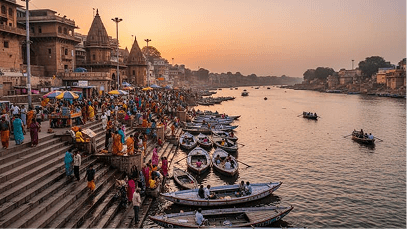
The snan, the holy dip in the Godavari, is the reason pilgrims come to the Kumbh. For all the logistics of getting there and staying safe, the bath itself is a sacred act, and approaching it with understanding and respect is part of the pilgrimage. This guide covers how the bathing works, how to take the dip as a lay pilgrim, what to wear, and, just as important, how to conduct yourself with courtesy at the ghats, around the akharas and sadhus, and in the temples.
A spirit of humility and respect goes a long way here. You're a guest at one of the oldest living religious traditions on earth; a little awareness of the customs honours that.
How the bathing works on a snan day
On the Amrit Snan days, the bathing follows an order, and understanding it helps you plan. In the pre-dawn and early-morning hours, the akharas — the ancient orders of ascetic monks — process to the ghats in a fixed ceremonial sequence and bathe first. This procession is one of the most striking sights of the Kumbh, and the right of the akharas to bathe first, in their settled order, is a matter of deep tradition. The Naga sadhus, in particular, draw great attention.
Lay pilgrims — that's you — generally bathe after or around the akhara processions, once the ghats open to the public for that day. On a principal snan, expect the akhara processions in the small hours and the main lay-pilgrim bathing window through the morning. The exact timings and any access windows are set by the administration for each date; follow the official announcements and the directions of the authorities and volunteers on the day. The crowd-timing detail is in our best hours guide. On ordinary days during the Mela, you can bathe at Ramkund freely; the order and crowds of the Amrit Snans don't apply.
How a lay pilgrim takes the dip
The bath itself is simple, and personal. There's no single prescribed procedure for a lay pilgrim, but the common shape is this. Many pilgrims pause first to take a sankalp, a quiet statement of intention or prayer, before entering the water. They then take the dip, often immersing three times, with the name of the deity or a prayer in mind. Some offer water to the Sun (arghya), cupping and pouring it as they face the sunrise. After bathing, pilgrims commonly offer prayers, and many carry home a small container of the sacred Godavari water as prasad.
What to wear for the dip
Modesty and practicality both matter. Bathe in clothes you're comfortable getting wet in and can change out of easily, for men, a dhoti or shorts with a simple top; for women, a saree or salwar-suit. Many women bathe clothed and change discreetly afterward; changing areas may be limited, so plan for it. Bring a dedicated set for the dip and a dry change sealed in a waterproof bag, plus a quick-dry towel. The full kit is in our packing checklist guide.
Etiquette at the ghats
A few courtesies that matter at the water:
- Give way to the akhara processions. On snan days, the akharas have right of way to the ghats. Don't obstruct them; watch respectfully from where you're directed.
- Don't crowd or pursue the sadhus. Observe from a respectful distance rather than pressing in.
- Keep moving on busy days. Take your dip and make room for the pilgrims behind you; the ghats serve enormous numbers.
- Keep the river and ghats clean. No soap, no litter, no leaving offerings that pollute the water.
- Be patient and kind. Tempers can fray in crowds and heat; a little grace toward fellow pilgrims keeps the spirit of the place.
Respecting the akharas and the sadhus
The sadhus, the ascetics who renounce worldly life, are central to the Kumbh, and the Naga sadhus, who go unclothed and ash-covered, are its most arresting figures. Treat them with respect. Don't touch them or their belongings, don't mock or treat them as a curiosity, and don't obstruct their movement or rituals. They are revered religious figures, not a spectacle laid on for visitors. If you wish to seek a blessing or speak with a sadhu, do so humbly and accept that many are absorbed in their observances and may not engage.
Can you photograph the Naga Sadhus?
This is a common question, and the answer is: with respect and discretion. The akhara processions are public and widely photographed, and photography is generally tolerated at a respectful distance. But courtesy matters — don't thrust a camera in a sadhu's face, don't obstruct rituals or processions for a shot, and seek consent before taking close or posed photographs of any individual. Some sadhus and akharas object to being photographed; respect a refusal immediately. Treat them as you would any person whose sacred moment you're sharing, not as a photo opportunity. Commercial or professional photography may require permission from the akharas or authorities.
Temple darshan etiquette
Visiting Trimbakeshwar, the Panchavati temples, and others, observe the usual customs:
- Remove footwear before entering temple precincts; carry it with you in a bag where you can, rather than leaving it at crowded stands.
- Dress modestly — covered shoulders and legs; some temples and rituals expect traditional attire, and for certain pujas men may be asked to wear a dhoti.
- Follow the queue and the priests' directions. Don't push; darshan for most pilgrims is from a designated area.
- Don't touch the deity or the lingam unless you've arranged a ritual that permits it — rules vary by temple. At Trimbakeshwar, close access is generally tied to specific pujas arranged in advance.
- Mind photography rules. Many sanctums prohibit photography; look for signs and respect them.
- Beware touts. Around famous temples, people may press ritual services or "special access" on you; arrange anything significant in advance through recognised channels. Our Trimbakeshwar Jyotirlinga guide covers it in detail.
A spirit of respect
Above all, approach the Kumbh as the sacred occasion it is for those around you. Dress and behave modestly, keep your voice and your conduct gentle in holy places, be considerate of pilgrims for whom this is the journey of a lifetime, and treat the rituals, the river, and the renunciates with reverence. That spirit, more than any rulebook, is the right etiquette.
Frequently asked questions
When can lay pilgrims bathe on an Amrit Snan day?+
Generally after or around the akhara processions, which bathe first in the pre-dawn and early-morning hours in their ceremonial order. The main lay-pilgrim bathing window runs through the morning; exact timings and any access windows are set by the administration for each date, so follow the official announcements on the day.
How do I actually take the holy dip?+
There's no single prescribed procedure. Commonly, pilgrims pause for a sankalp (intention or prayer), immerse three times with a prayer or the deity's name in mind, perhaps offer water to the Sun, and then pray. Many carry home a little Godavari water afterward. Take your dip with devotion, then move on to make room for others.
Can I photograph the sadhus?+
With respect and discretion. The processions are public and generally photographed at a distance, but don't intrude, obstruct, or take close or posed photos of individuals without consent, and respect any refusal at once. The sadhus are revered figures, not a spectacle.
What should I wear to bathe?+
Clothes you're comfortable getting wet in and can change out of — a dhoti or shorts and top for men, a saree or suit for women. Bring a dedicated bathing set, a dry change in a waterproof bag, and a quick-dry towel. Don't use soap or oil in the river.
Do I need to know rituals to attend?+
No. A respectful, sincere dip is enough; you don't need elaborate knowledge. Approach with humility, follow what those around you do, and be considerate — that's what matters.