
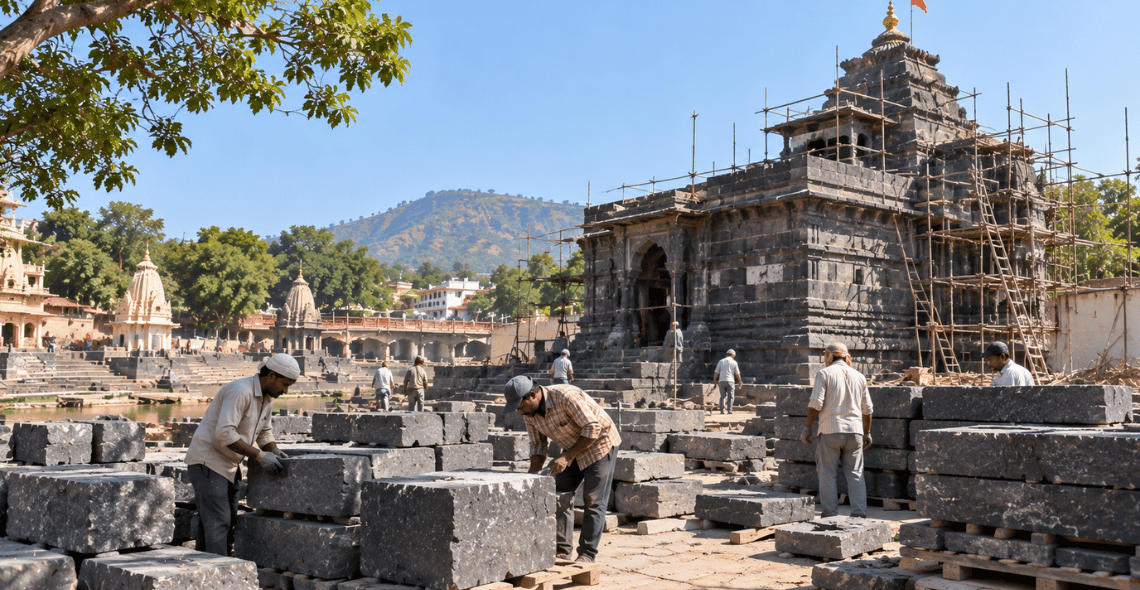
Restoration work on ancient temples, ghats and kunds in Nashik and Trimbakeshwar is facing a shortage of basalt stone as multiple heritage projects are being carried out at the same time ahead of the 2027 Simhastha Kumbh Mela. The shortage has increased stone prices, while suppliers are bringing material from other parts of Maharashtra and even Rajasthan.
Key Highlights
Basalt stone demand has increased due to multiple Kumbh-related restoration projects.
Mines in Nevasa have reportedly remained closed for around two years.
Stone is being transported from Deglur in Nanded to Nashik.
Some large basalt stones are being sourced from Rajasthan.
Restoration of 16 temples and kunds is currently underway.
Higher transport costs and weather conditions may affect the pace of work.
Rising Demand for Basalt Stone
Basalt is widely used in Maharashtra's historic temples because of its strength and durability. The State Archaeology Department is currently working on the restoration of 16 ancient temples and heritage sites in the Nashik-Trimbakeshwar region as part of Kumbh preparations.
The restoration programme has an estimated cost of around ₹56 crore, with basalt stone being an important material for several of the projects.
Stone Being Brought From Deglur and Rajasthan
The closure of mines in Nevasa has affected the local supply of basalt. Restoration contractors are now bringing hard basalt from Deglur in Nanded, which adds to transportation costs.
For larger architectural elements, some contractors are sourcing basalt from Rajasthan. According to a contractor quoted in the report, Rajasthan stone is available in larger and more solid pieces and can be used for structures such as large columns.
The report notes that stones for large structures, including columns measuring around 14 feet, may need to be sourced from Rajasthan.
Higher Costs and Transport Challenges
The increased demand has also pushed up prices.
According to the report, naturally available Deglur stone measuring around one by one-and-a-half feet is currently priced at approximately ₹130–₹140 per piece. Rajasthan basalt, supplied in cut and square forms, is priced according to its size and carving requirements.
Transportation from Rajasthan can cost around ₹1.25 lakh per truck, adding significantly to the overall cost of the restoration work.
16 Temples and Heritage Sites Under Restoration
Restoration and repair work is progressing at 16 temples, kunds and heritage locations in the Nashik-Trimbakeshwar region.
These include Naroshankar Temple, Prayag Tirth, Bilva Tirth, Indra Kund and Mukundeshwar among other sites. The projects require basalt stone for restoration and structural work.
The sudden increase in demand and limited number of suppliers have made timely availability of the stone a challenge.
Weather Adds to the Challenge
Weather conditions are another factor affecting stone supply. According to the Nashik division of the State Archaeology Department, contractors have reported difficulties in extracting stone from quarries during the monsoon because water collects in the mining areas.
Traditional stone construction also requires more time between layers compared with cement work. This can further affect project schedules, particularly during restoration work in Trimbakeshwar.
Restoration Work Ahead of Kumbh Mela 2027
The restoration of Nashik and Trimbakeshwar's historic temples, ghats and kunds is part of the wider preparations for the 2027 Simhastha Kumbh Mela.
With several projects being carried out simultaneously, ensuring a steady supply of suitable basalt stone will be important for keeping the heritage restoration work on schedule.