
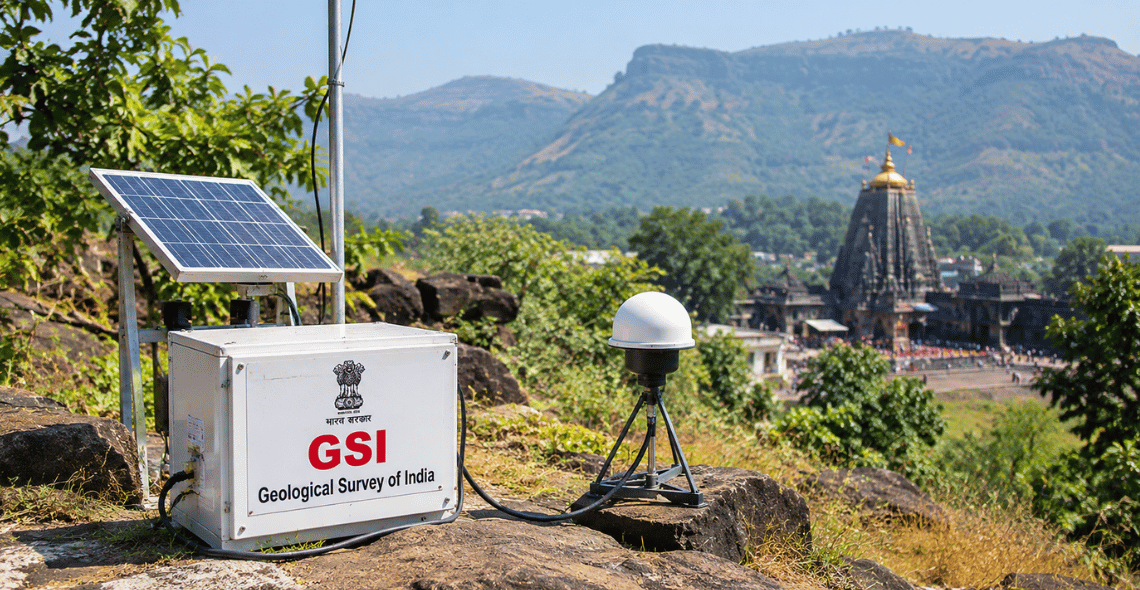
The Geological Survey of India (GSI) has started a special study of seismic activity in the Trimbakeshwar region ahead of Nashik Kumbh Mela 2027. Four advanced monitoring instruments are being used to record underground movements and vibrations continuously, 24 hours a day.
The study has been initiated following a request from the Maharashtra Government. It aims to assess the geological conditions of the region and identify potential seismic risks, keeping in mind the large number of pilgrims expected during the upcoming Simhastha Kumbh Mela and the infrastructure projects being developed for the event.
Key Highlights
GSI has started a special seismic activity study in the Trimbakeshwar region.
Four advanced instruments are monitoring underground movements continuously.
The monitoring is being conducted 24 hours a day.
A GSI team has been deployed in the region following a request from the Maharashtra Government.
Recorded data will be collected and analysed using specialised computer systems.
A report on seismic activity and potential risks will be submitted to the State Government after the monitoring study.
GSI Begins Special Seismic Monitoring in Trimbakeshwar
The Geological Survey of India has deployed a specialised team in the Trimbakeshwar region to study underground movements and seismic activity.
The initiative comes ahead of Nashik-Trimbakeshwar Simhastha Kumbh Mela 2027, when millions of devotees, saints and visitors are expected to travel to the region.
According to the ABP Majha report, the Maharashtra Government requested GSI to conduct the study to understand the geological conditions and assess possible earthquake-related risks.
The monitoring exercise covers Trimbakeshwar and its surrounding areas. Four advanced instruments have been installed to continuously record vibrations caused by underground movements.
Four Instruments to Monitor Underground Movements 24 Hours a Day
As part of the study, four specialised instruments are being used to monitor seismic activity around Trimbakeshwar.
These instruments record ground vibrations continuously, allowing scientists to collect information about underground movements over an extended period.
The collected readings will be stored and analysed using specialised computer systems. This will help the scientific team study seismic patterns and assess the geological conditions of the area.
The continuous monitoring is expected to provide useful information about the region's seismic behaviour before the major Kumbh-related activities take place.
Study to Assess Safety of Kumbh Mela Infrastructure
Nashik and Trimbakeshwar are preparing for a large gathering during the 2027 Simhastha Kumbh Mela. Several infrastructure projects are underway to support the expected movement of pilgrims.
These projects include roads, bridges, ghats, water supply systems, electricity networks, healthcare facilities and transport arrangements.
The geological study is important because the safety of these infrastructure projects depends partly on understanding the ground conditions in the region.
The findings could help the government and concerned departments consider geological factors while planning and developing infrastructure for the Kumbh Mela.
GSI to Submit Study Report to Maharashtra Government
The monitoring data collected through the four instruments will undergo detailed analysis through specialised computer systems.
According to GSI Director General Dinesh Ganvir, a report covering seismic activity and possible risks in the Trimbakeshwar region will be submitted to the Maharashtra Government after the three-month monitoring exercise.
The findings are expected to provide scientific inputs for planning and safety-related decisions ahead of Nashik Kumbh Mela 2027.
The study is part of the broader preparations to assess regional conditions and support the safe development of infrastructure for the upcoming Simhastha gathering.