
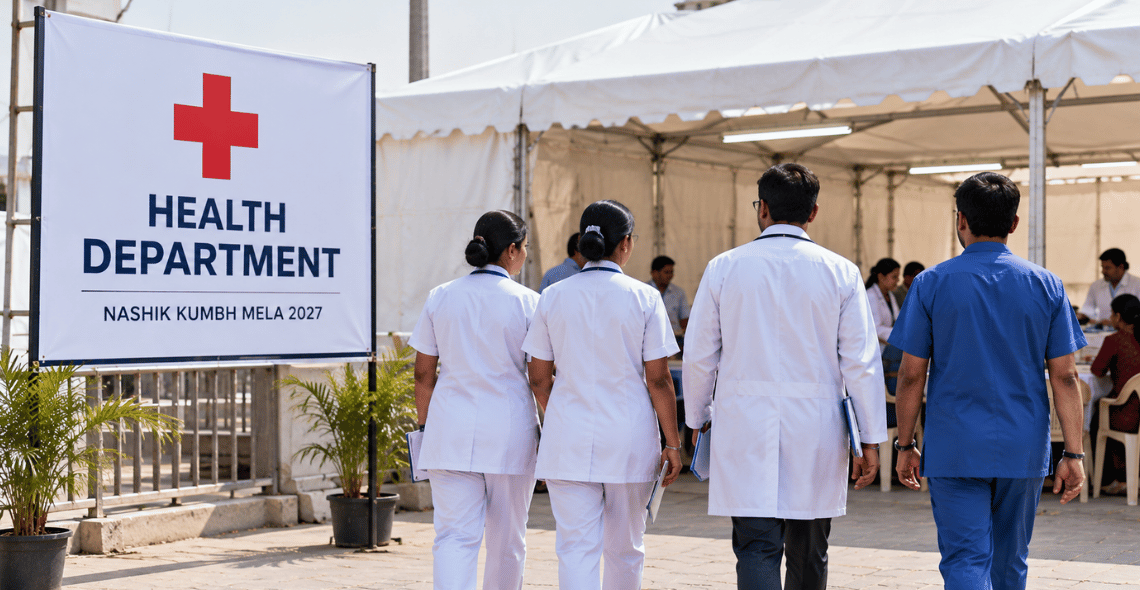
Healthcare preparations for Nashik Kumbh Mela 2027 are moving forward, with funding approved to strengthen medical services during the large religious gathering. The Maharashtra government has approved ₹20.24 crore for recruiting 1,618 temporary healthcare workers.
The recruitment is intended to support medical facilities and help manage the healthcare needs of the large number of pilgrims expected in Nashik and Trimbakeshwar during the Simhastha Kumbh Mela.
Key Highlights
₹20.24 crore approved for recruiting 1,618 temporary healthcare workers.
A separate approval of ₹4.35 crore has been reported for 34 specialist doctors and other medical staff.
Recruitment is part of preparations for healthcare services during Nashik Kumbh Mela 2027.
The additional staff will support medical arrangements during the event.
₹20.24 Crore Approved for Temporary Healthcare Staff
The state government has approved ₹20.24 crore to recruit 1,618 temporary healthcare workers for Nashik Kumbh Mela 2027. The additional staff are expected to support medical services during the event, when large numbers of pilgrims will visit Nashik and Trimbakeshwar.
Adequate healthcare personnel will be important for responding to medical emergencies, treating pilgrims and supporting health facilities during peak bathing days.
Separate Funding for Specialist Doctors
The report also mentions a separate approval of ₹4.35 crore for 34 specialist doctors and other medical staff. Specialist personnel are expected to strengthen the healthcare system's ability to respond to more complex medical needs during the gathering.
The recruitment and funding measures form part of the wider preparations to provide medical support to pilgrims and manage health-related emergencies.
Healthcare Preparedness for Nashik Kumbh Mela 2027
The recruitment announcement adds to the broader healthcare plan for Nashik Kumbh Mela 2027, which includes temporary medical facilities, ambulances and additional medical personnel.
With a large number of devotees expected during the event, staffing, emergency response and access to medical treatment will remain important parts of the preparations.